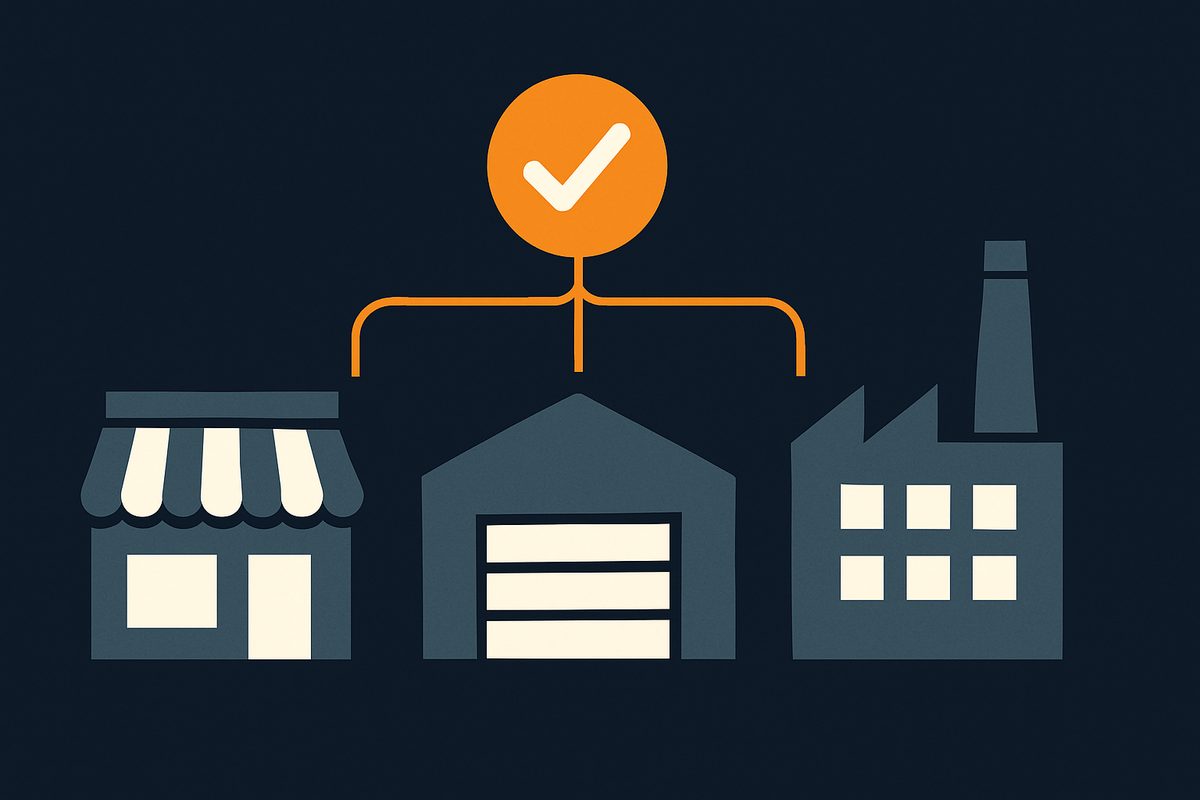
FBR digital invoicing applies one identical rulebook to retailers, wholesalers and manufacturers, but the requirement that bites hardest differs by position in the chain: manufacturers are most exposed on HS code classification, wholesalers on buyer registration data across mixed registered and unregistered buyers, and retailers on the volume of small, high frequency point of sale transactions.
Manufacturers: HS codes carry the most weight
Manufacturers typically sell a defined, relatively stable product range, which sounds like it should make classification easy. The stakes are higher than for a retailer selling the same item onward, because a manufacturer's invoice is often the first point an HS code enters the supply chain at all, get it wrong here and it can propagate through every invoice downstream that references the same product. Manufacturers also deal more often with buyers claiming input tax, which puts more scrutiny on getting the buyer's registration details exactly right.
Wholesalers and distributors: volume and buyer mix
Wholesalers sit in the middle, and the practical challenge is usually volume combined with a mixed buyer base, some registered, some not, often across a wide product catalogue. Where a manufacturer might invoice a handful of large buyers, a wholesaler can be invoicing dozens of retailers a day, each needing the correct registration type and, if applicable, NTN captured accurately. A single wrong registration type on a repeat buyer means that same mistake repeating on every future invoice to them until it is caught.
Retailers: real-time, high-frequency, low-value transactions
Retail is the opposite shape: many small transactions rather than fewer large ones, frequently to unregistered individual buyers rather than businesses. For Tier-1 retailers specifically, this is also where point-of-sale integration matters most, invoicing has to keep pace with the counter rather than being a back-office task done at the end of the day. The margin for a slow or manual step is much smaller here than for a manufacturer issuing a handful of invoices a week.
What this means in practice
If you are a manufacturer, the highest-value thing to get right early is your product catalogue and HS code mapping, since errors there are the most expensive to unwind later. If you are a wholesaler, invest in getting buyer registration capture right and keep it consistent across repeat customers. If you are a retailer, the priority is speed: invoicing needs to happen automatically at the point of sale, not as a separate step someone remembers to do afterward.
One system, tuned to how you actually sell
Axiom Square handles the product catalogue, buyer records, and point-of-sale flow together, so the details that matter most for your business are the ones actually enforced.
See Axiom SquareGeneral information, not tax advice. Confirm which category and scenarios apply to your specific business with your tax consultant.
Common questions
Do retailers, wholesalers and manufacturers follow different FBR digital invoicing rules?
No. One identical rulebook applies to all three. What differs is which requirement bites hardest by position in the chain: manufacturers are most exposed on HS code classification, wholesalers on buyer registration data across a mixed registered and unregistered base, and retailers on high frequency, low value transactions.
Why do HS codes matter most for manufacturers?
A manufacturer's invoice sets the classification that travels down the chain with the product, so the stakes are higher than for a retailer selling the same item onward. Product catalogue and HS code mapping errors are the most expensive to unwind later.
What is the hardest part for wholesalers and distributors?
Volume combined with a mixed buyer base, some registered and some not, often across a wide product catalogue. Where a manufacturer might invoice a handful of large buyers, a wholesaler is reconciling many, which makes buyer registration data the thing worth investing in.
What makes retail different under digital invoicing?
Retail is the opposite shape: many small transactions rather than fewer large ones, frequently to unregistered individual buyers rather than businesses. For Tier 1 retailers specifically, this is also where point of sale integration matters most.