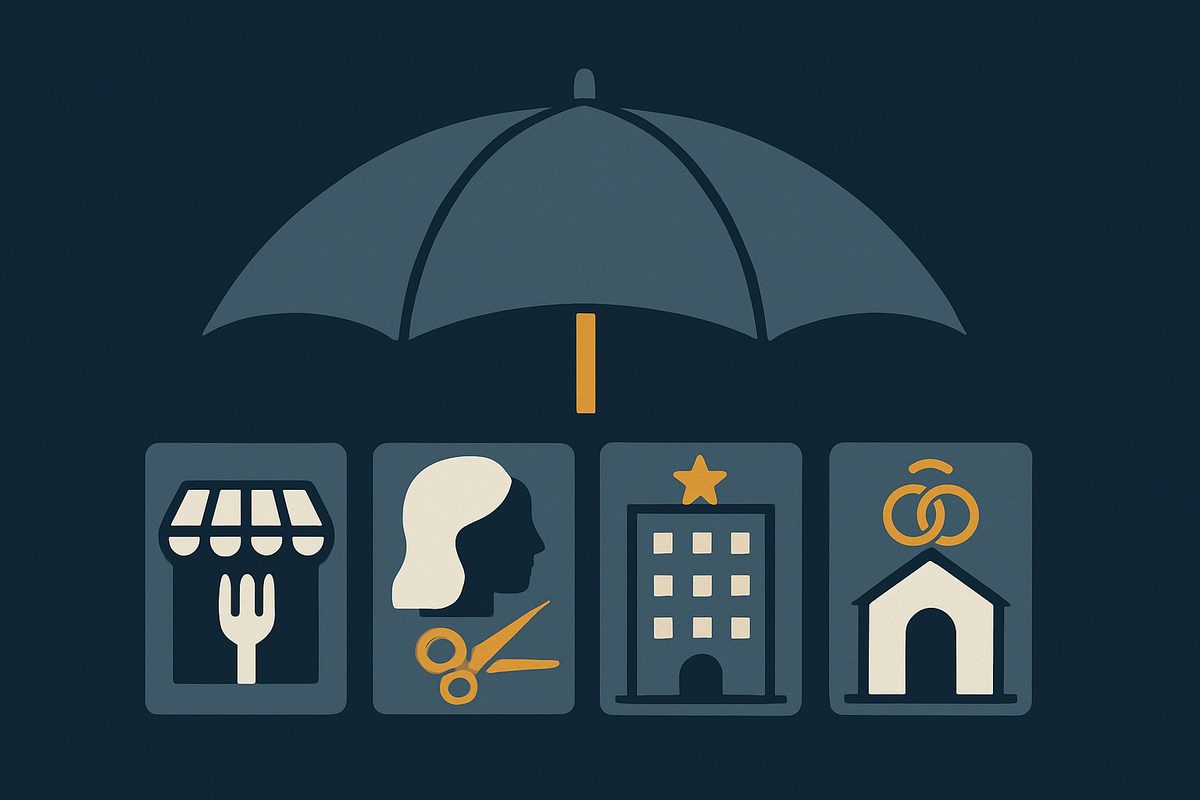
PRA eIMS applies to you if you supply taxable services in Punjab and your turnover crosses the threshold in rule 3 of the Punjab Electronic Invoice Monitoring System Rules 2019. Your industry does not decide whether the rules apply, it decides which of the two thresholds you are measured against: six million rupees for restaurant services, ten million rupees for everything else.
The two questions
The first question is jurisdictional. Sales tax on services in Punjab is levied under the Punjab Sales Tax on Services Act 2012 and administered by PRA, so the service has to be a taxable service and it has to be provided in Punjab.
The second is the threshold, and it is the one people get wrong. Rule 3 of the Punjab Electronic Invoice Monitoring System Rules 2019 originally set a flat ten million rupees. It was amended by a notification gazetted on 15 July 2024, which substituted six million rupees or above in case of restaurant services, and ten million rupees or above in case of all other services. We set that out in full, with the gazette page, in what is PRA eIMS.
So your business type does not decide whether you are in. It decides which number you measure yourself against, and that difference is four million rupees of turnover.
Restaurants, cafes and coffee shops
The clearest case, and the lower threshold. Restaurant services carry the six million rupee figure, which for a single busy outlet is not a high bar. This is also the sector Punjab enforcement has concentrated on: the August 2026 drive against handwritten receipts named restaurants and coffee shops directly.
The practical point for a restaurant is speed rather than paperwork. Invoicing has to keep pace with the counter, which means the eIMS submission has to happen inside the billing flow rather than as a separate step someone does later.
Hotels and guest houses
A hotel provides accommodation services, which are taxable in Punjab in their own right, and most hotels of any size also run food service. That means a hotel can be sitting on both sides of the threshold split at once, and the honest answer is that you should get the classification confirmed rather than picking whichever figure suits.
If you are anywhere near either number, the safe planning assumption is the lower one. Being early to eIMS costs a setup afternoon. Being late costs a penalty and, in the current enforcement climate, the risk of sealing.
Marriage halls, banquet halls and caterers
Named directly in the August 2026 enforcement drive, and structurally awkward, because the business is a small number of large invoices rather than a stream of small ones. That has two consequences. First, turnover crosses a threshold much faster than the invoice count suggests, so a hall doing a few dozen events a year can be well inside. Second, the pricing is usually per unit of something, per head, per daig, per hour, which needs setting up correctly in the product list once so that every event invoice calculates itself. Our setup walkthrough covers exactly that.
Salons, spas, clinics and gyms
Beauty and wellness services are taxable services in Punjab, and enforcement coverage in 2026 has referred to beauty services alongside food. Unless the service is classified as a restaurant service, which it will not be, the applicable figure is ten million rupees, not six.
This is where the flat six million myth does real damage. A mid sized salon turning over seven or eight million has been told by a great deal of published content that it is inside the system when, on the face of the amended rule, it is not. Being registered when you did not need to be is not a disaster, but it is a cost and an ongoing obligation you took on for no reason.
Consultants, agencies, IT firms and professional services
Same position: ten million rupees, if the service is taxable in Punjab. The thing to be careful about here is not the threshold but the tax treatment of the service itself, because the treatment of IT and IT enabled services under provincial sales tax is one of the genuinely contested areas in Pakistani tax and the published guidance contradicts itself. We are not going to resolve that in a paragraph. If you are an IT or ITeS exporter, treat your provincial position as a question to settle with a consultant against the current Second Schedule, not as something to read off a blog.
Businesses selling goods as well as services
A very common shape, and the one that catches people out. A salon that sells retail products, a restaurant with a bakery counter, a gym selling supplements, a consultancy reselling hardware. Goods are federal, services are provincial, and the two systems are separate: separate registration, separate credentials, separate codes, separate returns. It is entirely possible to owe compliance to both PRA and FBR at once. That is the subject of FBR digital invoicing, PRA invoicing, or both, and it is worth reading before you buy software rather than after.
Businesses operating in more than one province
PRA covers Punjab. Sindh, Khyber Pakhtunkhwa and Balochistan each run their own service tax authority with their own rules, their own registration and, in some cases, their own invoicing system. A chain with outlets in Lahore and Karachi is dealing with two authorities, not one, and the Punjab thresholds on this page tell you nothing about the Sindh position. Ask about each province separately.
What to do if you are close to the line
- Use your declared turnover, not your estimate. The threshold is a turnover test, and the figure that will be used against you is the one in your filings.
- Settle the classification before the threshold. For a hybrid business, whether you provide restaurant services is the question that sets your number. Get it in writing if you can.
- Assume you will cross it. Thresholds in this area have moved downwards, not upwards. The 2024 amendment lowered the restaurant figure from ten million to six.
- Ask, do not guess. If your position is genuinely borderline, an hour with a consultant is cheaper than either outcome of getting it wrong.
Not sure which side of the line you are on?
Tell us your services and your turnover and we will tell you which threshold applies, what registration involves, and what going live actually looks like for your business.
Open PraTaxLast verified: 22 August 2026. Primary source for the thresholds on this page: the Punjab Gazette (Extraordinary) of 15 July 2024, Notification 109 of 2024, substituting the threshold in rule 3 of the Punjab Electronic Invoice Monitoring System Rules 2019, made under section 76 of the Punjab Sales Tax on Services Act 2012. Whether a particular business provides "restaurant services" for the purposes of that rule is a classification question and we do not decide it here. The provincial sales tax treatment of IT and IT enabled services is deliberately left open, because the available guidance conflicts and we could not settle it from a primary source. General information, not tax advice.
Common questions
Does your industry decide whether PRA eIMS applies to you?
No. Your industry does not decide whether the rules apply, it decides which of the two thresholds you are measured against: six million rupees for restaurant services, and ten million rupees for everything else.
What is the threshold for restaurants?
Six million rupees, the lower of the two, which for a single busy outlet is not a high bar. This is also the sector Punjab enforcement has concentrated on.
How are hotels and guest houses treated?
A hotel provides accommodation services, which are taxable in Punjab in their own right, and most hotels of any size also run food service. That means a hotel can be sitting on both sides of the threshold question at once.
What about marriage halls, banquet halls and caterers?
They were named directly in the August 2026 enforcement drive, and they are structurally awkward because the business is a small number of large invoices rather than a stream of small ones.
Do salons, spas, clinics and gyms fall under eIMS?
Beauty and wellness services are taxable services in Punjab, and enforcement coverage in 2026 has referred to beauty services alongside food. Unless the service is classified as a restaurant service, the ten million rupee threshold is the one that applies.